When senior figures in the human rights and humanitarian sector publicly and privately model and amplify certain tropes andattitudes, they do more than express personal views. They set institutional tone, confer legitimacy on those below them, and signal to staff, funders, media, and the public what the sector values, who it protects—and how it is permissible to speak in general.
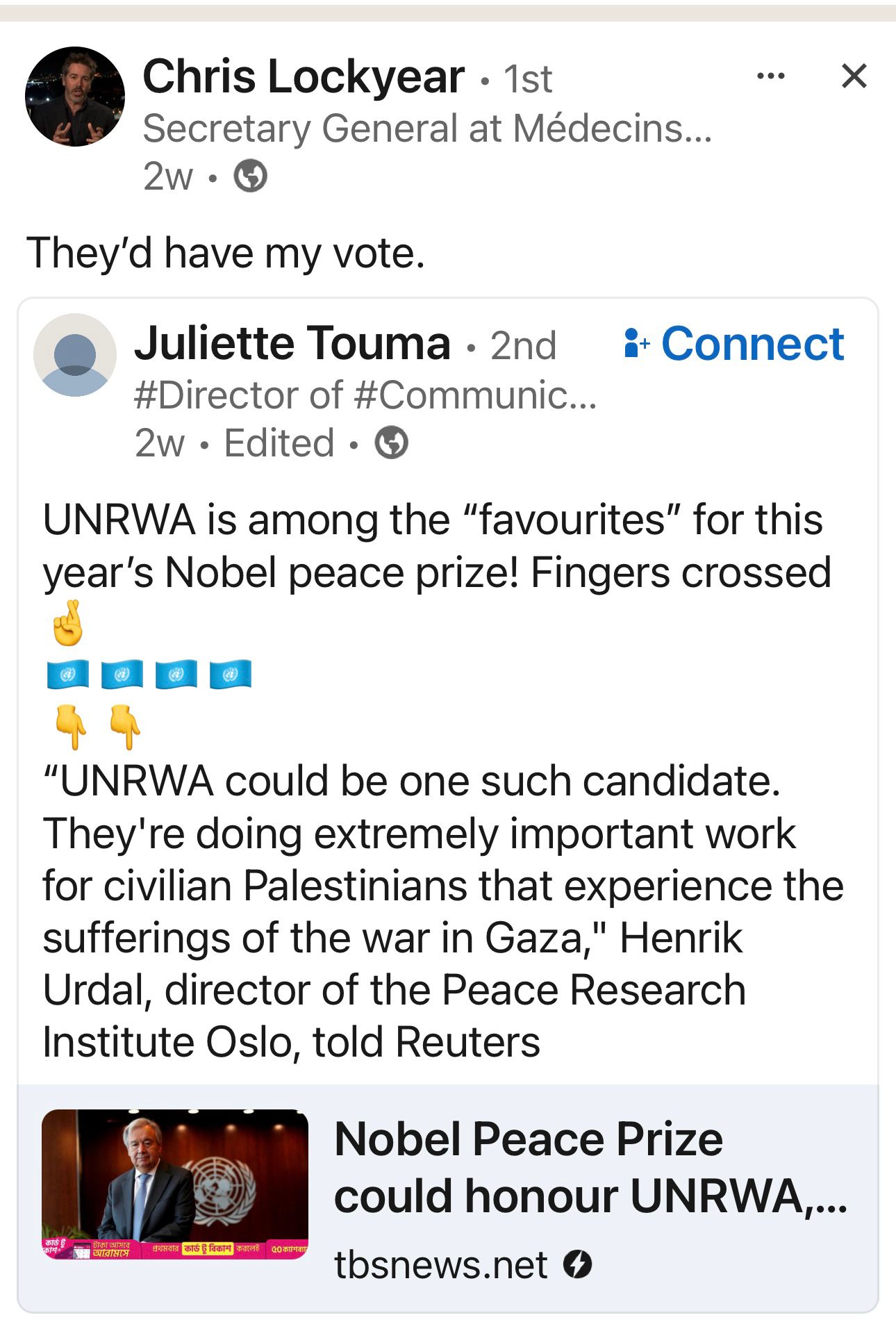
In 2024, Christopher Lockyear, secretary general of MSF, publicly gave “my vote” for UNRWA to receive the Nobel Peace Prize. His endorsement did not address the first-hand testimony from Israeli hostages of being held captive by UNRWA staff in Gaza; findings by the United Nations’ own internal watchdog that evidence “could indicate” UNRWA involvement in the October 7 attacks, after which it terminated nine contracts; and an Israeli intelligence dossier naming 12 UNRWA employees alleged to have been involved in the October 7 attacks, leading more than a dozen countries to suspend funding.